Start with people, bags and the actual plan
Before comparing vehicle names, write down three things: the largest number of people travelling at once, everything that needs to travel with them, and the journey that is hardest to accommodate. A van that suits a short dinner outing may need a different configuration for a week away with suitcases. A vehicle that works for one family may not suit a team carrying bulky personal equipment.
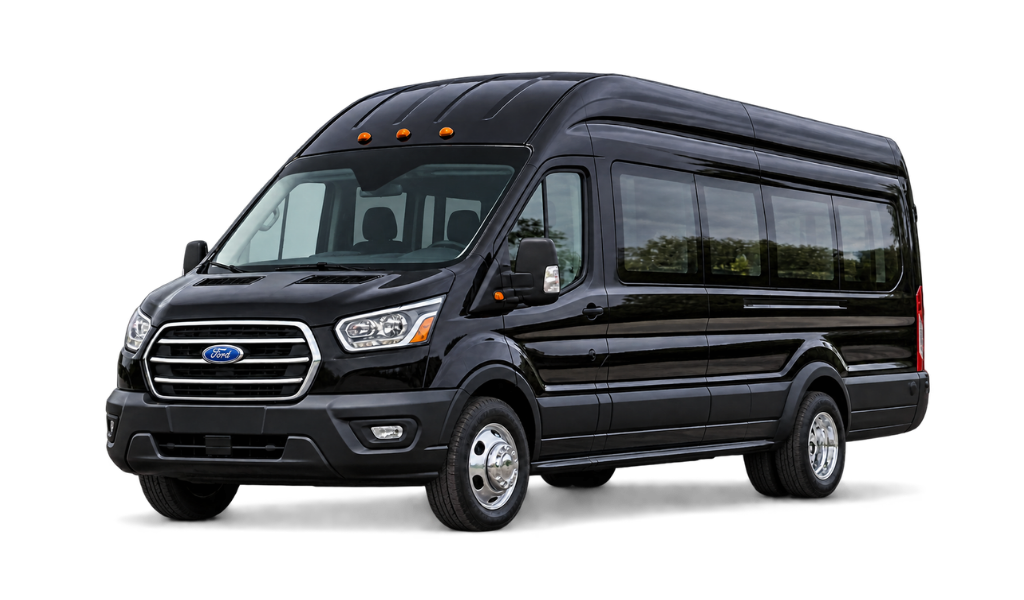
CHS features black and white Ford Transit passenger vans and a black Mercedes Sprinter. Its listings describe configurations for up to 15 passengers. That published maximum is not a promise that every combination of people and bags will fit. Confirm the seating and luggage arrangement of the vehicle assigned to your rental before making plans around it.
Count the busiest journey, not the average one
A group can change size during a trip. Some people may join after the first pickup, leave early, or travel separately for part of the day. Build your headcount around the journey with the most passengers. Include the person who will drive when discussing the total number of occupants and confirm how the listed capacity applies to the assigned vehicle.
Keep adults, children and any special seating needs visible in your planning notes. Do not assume a vehicle has a particular child-seat arrangement or accessibility feature because it has enough seats. Explain the requirement to the team and ask what can be accommodated. The aim is to settle the important fit questions before anyone arrives for pickup.
Make luggage a separate conversation
“We have some bags” leaves too much to interpretation. A more useful description is a count of large suitcases, carry-on bags, backpacks and unusual items. Mention golf bags, garment bags, coolers, instruments, sports equipment or production cases separately. If an item is awkwardly shaped, measure it and describe how it will be packed.
Look through the real interior and cargo photographs on the black Transit page and the Sprinter page . Use them to form questions, then ask the team to confirm the relevant layout. A photograph helps you understand the type of space; it cannot confirm the loading plan for an unspecified group or guarantee which individual vehicle will be assigned.
Compare the featured types by fit
The fleet comparison is a useful place to begin. Keep your decision focused on the actual cabin, access and luggage arrangement rather than choosing by badge alone. If your group has a preference for a particular model or exterior colour, state it in the request and ask whether that preference can be met for your dates.
| Option | What to inspect | What to confirm |
|---|---|---|
| Ford Transit · Black | Exterior angles, seating and rear storage photos | Assigned layout, passenger count and luggage fit |
| Ford Transit · White | Cabin access, seating and cargo photographs | Colour preference and suitable configuration |
| Mercedes Sprinter | Cabin, rear storage and dashboard photographs | Exact features, seating and available luggage space |
Decide whether one shared schedule is realistic
One van works best when the people using it can follow a reasonably shared itinerary. If one part of the group wants an early start and another has a late finish, write down how those journeys will happen. It can be better to identify the scheduling conflict now than to discover that the same vehicle is expected in two places at once.
For larger groups, discuss the number of vehicles alongside the number of people. Simply dividing the headcount by the published maximum leaves out bags, separate arrival times and the practical work of coordinating several vehicles. Ask CHS to review the whole plan, including the group’s largest simultaneous movement and the number of people prepared to drive.
Give dates and times together
Include the requested pickup and return times as well as the dates. “Friday to Sunday” does not explain whether you need the van before an early departure or until after an evening return. Describe the first journey and the last journey, then allow time in your own schedule for the rental handover and getting everyone ready.
If the itinerary is still changing, separate confirmed details from estimates. For example, say that the event time is fixed but the final passenger list is pending. Ask how changes should be communicated and when final details are needed. Do not treat an estimate, enquiry or website preview as a confirmed reservation.
Be specific about your pickup market
CHS lists service markets in Charleston, Wilmington, Myrtle Beach and Charlotte. Choose the market that relates to your rental request and explain where your group is starting and finishing. A listed service area does not establish a branch at every hotel, airport or venue, and it does not confirm delivery to your preferred meeting point.
The Charleston rental planning page and the other service-area pages help you organise those details. Ask the team to confirm the pickup location, return arrangements and any additional service you need. Keep the confirmed instructions with the person responsible for collecting the vehicle.
Inspect the details your group will use
When viewing vehicle photographs, move beyond the main exterior shot. Look at the way the seats are arranged, the rear storage area, the entry points and the dashboard. Think about what matters to your passengers: getting in and out, keeping the group organised, and placing belongings where the agreed layout allows.
Make a short list of features you need to confirm rather than assuming every example has identical equipment. A gallery can show a feature on a photographed van without promising that it appears on every rental. If a particular feature is essential, put that question in writing with your requested vehicle type and dates.
Agree who owns the rental details
A group enquiry becomes much easier when one person brings the information together. Choose a lead contact who can confirm the passenger list, gather luggage details, compare the proposed vehicle and share the final arrangements with the group. If someone else is collecting the van, make that clear during the conversation.
Ask the team about the applicable rental and driver requirements directly. Avoid passing around assumptions from a different rental company or a previous trip. Before agreeing to a booking, review the actual terms, charges and arrangements supplied for your request. This guide is a planning aid, not a substitute for that agreement.
Separate preferences from essential requirements
Give each request a clear priority. A particular exterior colour may be a preference, while space for a specific item may be essential. Tell the team which details can change and which cannot. That makes it easier to discuss a suitable alternative if your first choice does not match the dates or load you have described.
A useful fit brief has three short columns: essential, preferred and still to decide. Put the maximum passenger count and unavoidable luggage in the first column. Put appearance preferences in the second. Put an incomplete return time or uncertain guest count in the third. Revisit that last column before agreeing to the rental. If an unresolved detail changes, ask whether the proposed vehicle and arrangement still work. This keeps an early enquiry useful without pretending that the first version of your trip is the final one.
Send a request the team can work with
A useful first message is short but specific. It should give the team enough information to ask the right follow-up questions without guessing what the group needs. You do not need a polished itinerary to begin, but clear estimates are better than missing details.
- Requested market, pickup date and time, and return date and time.
- Maximum passenger count and the person coordinating the rental.
- Number and size of bags, plus any unusual equipment.
- Destination, main journeys and any separate group schedules.
- Preferred vehicle type or colour, and essential features to confirm.
- Questions about pickup, return, driver arrangements and the quote.
Keep a copy of what you send. When the team replies, check that the proposed arrangement answers the needs you listed rather than comparing only a headline figure.
Check the complete quote, then make the group plan
Once a vehicle has been proposed, review what is included, what needs confirming and how the rental will be arranged. Ask about any part of the quote you do not understand. Confirm the vehicle type, dates, times, pickup instructions and the process for changes before telling the group that everything is settled.
For event travel, the wedding and group transport guide goes deeper into multiple locations and departure times. Production coordinators can use the production rental checklist to bring a changing schedule into one clear request.
Ready to outline your trip?
Use the rental request preview to see the details that help shape a quote. This review website does not submit an enquiry or hold a vehicle. For a real rental conversation, call the CHS team on 803.566.2499 . Bring your people, luggage and itinerary notes; the next step is confirming a suitable arrangement for your actual trip.